1. What is HEMC?
HEMC (Hydroxyethyl Methyl Cellulose) is a non-ionic cellulose ether. It appears as a white or off-white, odorless and tasteless powder, soluble in cold water but insoluble in hot water. Produced from natural cellulose through alkalization and etherification reactions, HEMC is one of the most important functional additives in dry-mix mortar.
2. HEMC: The Core Performance Switch for Dry-Mix Mortar
Its main contributions to dry-mix mortar can be summarized as follows:
✅ Provides excellent water retention – ensures full hydration of cement and improves bonding strength
✅ Improves construction workability – thickens slurry, resists sagging and ensures smoother operation
✅ Extends open time – retarding effect provides sufficient operating window
✅ Enhances toughness – reduces drying shrinkage and lowers the risk of cracking
3. Main Application Fields and Selection Guide
Different types of dry-mix mortar have different performance requirements for HEMC. The main application fields and selection suggestions are as follows:
(1) Plastering Mortar
Recommended viscosity: Medium-high viscosity (85,000–110,000 mPa·s)
Key requirements:
Good water retention to prevent moisture from being absorbed by high-water-absorption substrates such as aerated concrete; excellent lubricity for smooth construction; resistance to cracking and hollowing.
For plastering mortar for aerated concrete, adding only 0.2% of HEMC can significantly improve its performance. **KDOCEL® ME 60 and ME 150M are ideal choices for this scenario**, with stable water retention and outstanding construction smoothness.
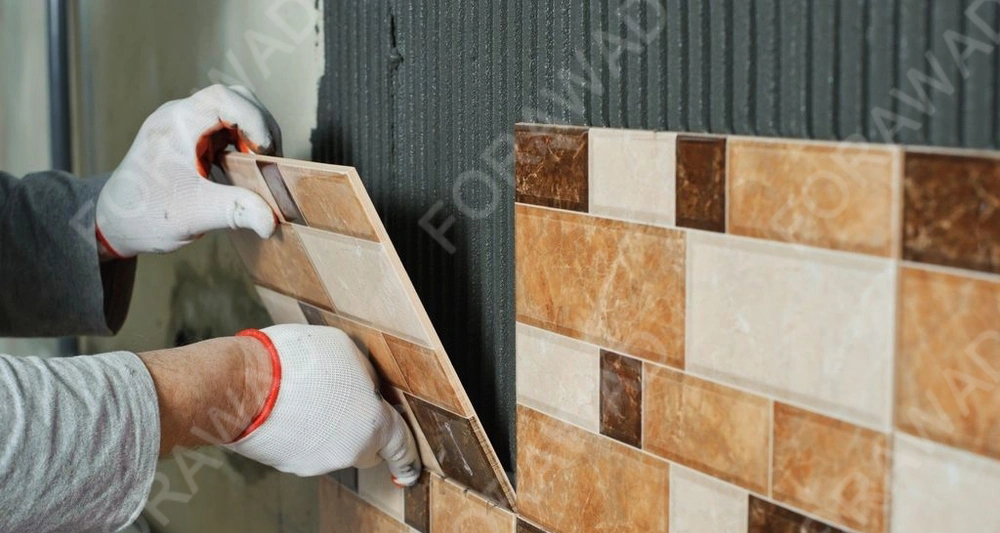
(2) Tile Adhesive
Recommended viscosity: Medium viscosity (about 40,000–80,000 mPa·s)
Key requirements:
Sag resistance, extended open time and improved bonding strength.
**KDOCEL® MHEC 60MS and ME 40EX are widely used in tile adhesive formulations**, which can effectively enhance the anti-slip performance and prolong the operable time of the mortar.
(3) Gypsum-based Mortar
Recommended viscosity:
Hand plastering: 85,000–110,000 mPa·s; Gypsum putty: 140,000–160,000 mPa·s
Key requirements:
Water retention and control, improved adhesion, and resistance to hollowing and cracking.
Adding about 0.2% cellulose ether to gypsum-based mortar can significantly improve its construction performance. **KDOCEL® ME 60DX is specially designed for gypsum plastering systems**, matching the hydration characteristics of gypsum perfectly.
(4) Self-leveling / Repair Mortar
Recommended viscosity: Low viscosity
Key requirements:
Ensure fluidity while maintaining water retention, and the retarding effect ensures sufficient hydration.
**KDOCEL® MHEC 400, a low-viscosity grade, is specially developed for self-leveling compounds**, which balances fluidity and water retention without affecting the leveling effect.
(5) Wall Putty
Recommended dosage:
Interior wall putty: about 3.5‰; Exterior wall putty: about 4.5‰
Key requirements: Smooth construction, water retention and crack resistance.
**KDOCEL® ME 4M is suitable for cement-based putty products**, with moderate viscosity and good film-forming performance to meet the construction needs of interior and exterior wall putty.
4. Other Types of Cellulose Ethers and Important Notes
In addition, there are other types such as HEC (Hydroxyethyl Cellulose) and CMC (Carboxymethyl Cellulose). It should be noted that CMC is an ionic cellulose ether and is unstable in the presence of calcium ions, so it is not suitable for cement-based dry-mix mortar.
Viscosity is not the higher the better: although products with a higher nominal viscosity have a higher final viscosity, they may dissolve slower and take longer to take effect. Coarse-grained cellulose ethers have the same problem.
Consider the construction environment: for construction in high-temperature environments, HEMC is recommended instead of HPMC, because HEMC has a higher gel temperature and more stable water retention performance.
Pay attention to strength balance: HEMC will reduce the compressive strength of mortar, which needs to be compensated by adjusting the proportion of cementitious materials or adding redispersible latex powder in the formula design.
Synergistic effect: HEMC is often used in combination with EVA latex powder, water repellent and other additives, with certain synergistic or interactive effects.
5. Modified HEMC
To meet more complex construction needs, specially modified HEMC products are being developed, such as:
Retarding type: further extends the usable time;
Instant-soluble type: improves the dissolution speed;
Temperature-resistant type: adapts to a wider temperature range.
Selecting the appropriate HEMC grade (viscosity, fineness, modification type) and precise dosage control are the keys to developing high-performance dry-mix mortar products. It is recommended to determine the optimal formula through tests based on specific raw materials and construction conditions.