
Abstract
Self-leveling mortar is an indispensable high-efficiency floor material in modern building construction. As the core rheological additive, hydroxyethyl methyl cellulose (HEMC), typified by FWD HEMC ME400, directly influences the fluidity, anti-segregation, setting and hardening, and final mechanical properties of mortar through water retention, thickening and rheological regulation.
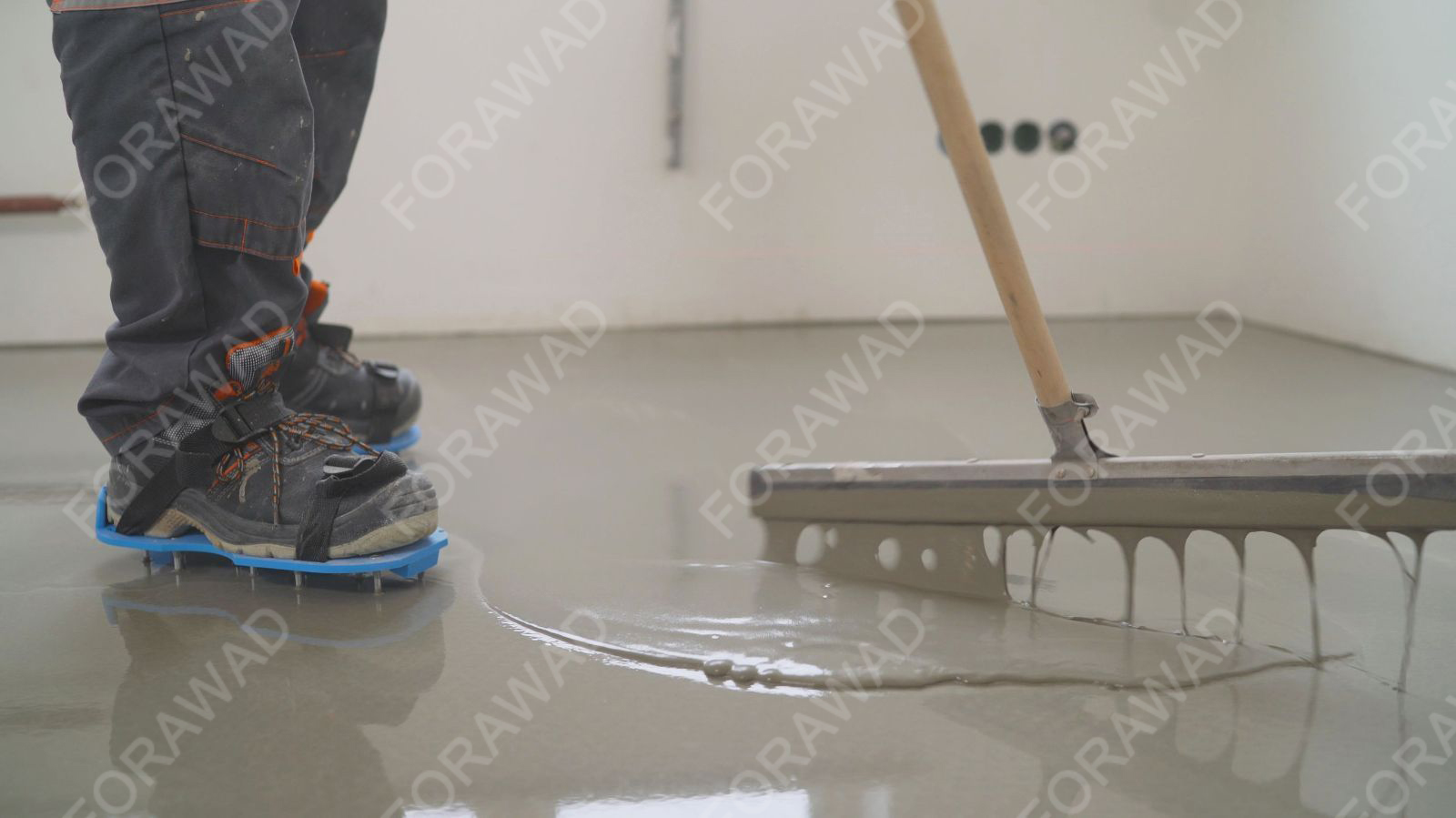
- Core Functions of HEMC
In self-leveling mortar, HEMC mainly plays three key roles:
Water Retention and Cement Hydration Assurance
The hydroxyl and ether bonds on the HEMC molecular chain can form hydrogen bonds with water molecules, significantly increasing the viscosity of the aqueous phase and slowing down water evaporation. This is particularly critical for thin-layer construction (usually 3–10 mm), ensuring sufficient moisture for cement hydration, avoiding surface powdering and cracking, and improving bonding strength.
Thickening and Anti-Segregation
By increasing the paste viscosity, HEMC effectively suspends high-density aggregates (such as quartz sand and heavy calcium carbonate) to prevent sedimentation, while inhibiting free water floating (i.e., "bleeding"). This ensures a uniform internal structure and consistent surface strength of the hardened floor.
Rheological Regulation
HEMC imparts shear-thinning properties to the mortar—viscosity decreases during mixing for easy flow and recovers at rest to support its own weight. This provides an ideal "flow-stop" balance: sufficient fluidity for self-leveling and suitable yield stress for stable slope formation (especially at boundaries or in thin-layer areas).
- Key Specification: Why "400" Is a Typical Starting Point
The number in common commercial grades such as "FWD HEMC ME400" represents the viscosity specification (generally Brookfield viscosity of 2% aqueous solution at 20°C, unit: mPa·s). Medium-low viscosity (approx. 400 mPa·s) HEMC, represented by FWD HEMC ME400, is widely adopted in self-leveling mortar for the following reasons:
- Too low viscosity <200𝑚𝑃𝑎𝑠: Insufficient water retention, easy segregation and bleeding, excessive fluidity with poor stability
- Viscosity around 400 mPa·s: Balanced point—provides adequate anti-segregation without hindering flow and air release
- Too high viscosity >1000𝑚𝑃𝑎𝑠: Significantly reduced fluidity, increased water demand, slow drying, and prone to bubble defects
- Therefore, for most general-purpose self-leveling systems, starting testing with the 400 viscosity grade is efficient and safe. Some thick-layer or special-requirement systems may select products with 300–600 mPa·s.
- Formula Synergy Factors
- Cement system: High-alumina cement or ternary systems have different water retention requirements, which may require adjusting the HEMC dosage or selecting modified grades.
- Water reducer: High-efficiency water reducers reduce viscosity, so the HEMC dosage should be adjusted accordingly to maintain stability.
- Redispersible polymer powder (RDP): Attention should be paid to the matching of total solid content and rheological curve when used in combination.
- Conclusion
- Hydroxyethyl methyl cellulose (HEMC), especially FWD HEMC ME400, is a versatile and indispensable additive in self-leveling mortar. Reasonable selection of viscosity grade (usually starting with 400) and addition ratio (0.2%–0.5%), combined with optimization for specific formula systems, can produce self-leveling materials with high fluidity, excellent anti-segregation and reliable mechanical properties. In the development of high-performance self-leveling products, systematic screening and compatibility research of HEMC have important engineering value.
- For information on specific application scenarios (such as thick-layer self-leveling, fast-drying systems) or specific HEMC models, please visit fwdnewtech.comor contact us via info@fwdnewtech.com.