
 Core Function
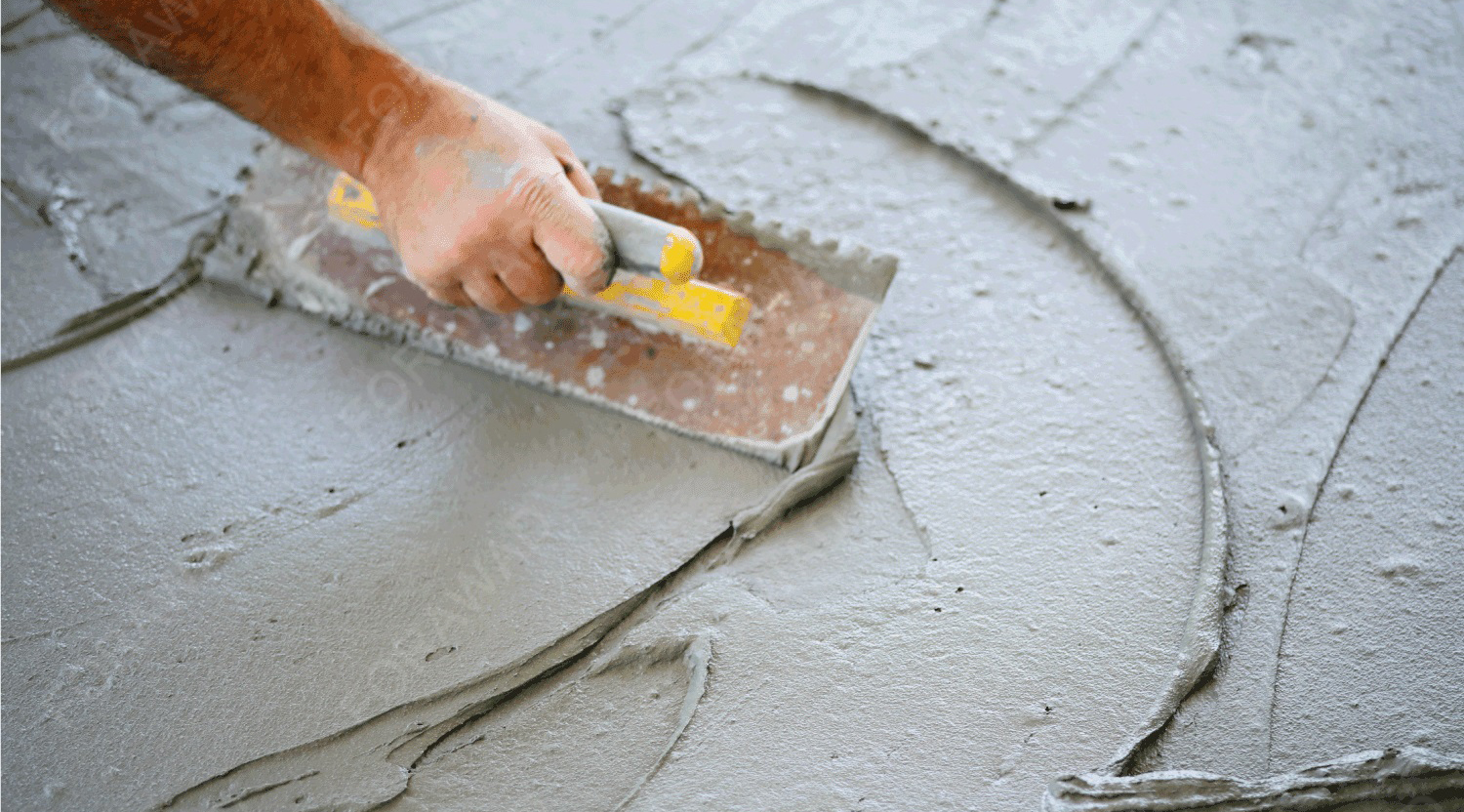
RDP (e.g., VAE copolymer powder) is a key additive in dry-mix mortars. Upon contact with water, it redisperses into an emulsion, forming a polymer film during hardening. This effectively combines the advantages of rigid inorganic materials (cement/gypsum) with flexible organic polymers.
Key Performance Improvements
- Adhesion: Provides strong bonding to substrates (concrete, tiles, etc.), preventing hollow spots or delamination.
- Flexibility: Imparts elasticity to the mortar, resisting cracks caused by shrinkage and temperature fluctuations.
- Workability: Increases lubricity and water retention for easier application, better spreadability, and improved sag resistance.
- Durability: Fills pores, enhancing density, impermeability, and weather resistance.
Typical properties
| Item | RDP
FWD 1100 |
RDP
FWD 1200 |
RDP
FWD 5044 |
RDP
FWD 5031 |
RDP
FWD 5010 |
RDP
FWD 5111 |
| Appearance | White flowing powder | |||||
| Polymer Type | Vinyl Acetate- Ethylene copolymer | |||||
| Protective Colloid | PolyvinyI Alcohol | |||||
| Solids content (%) | 98 min | |||||
| Bulk density | 400-550 g/1 | |||||
| Particle Size | 80μm | |||||
| PH | 5.0-8.0. | |||||
| Viscosity | 0.5-2.0 | |||||
| Ash content (%) | 12+2 | |||||
| MFFT (°C) | 4 | 1 | 0 | 0 | 4 | 4 |
Characteristics in Two Material Systems
- Cement-based mortars(tile adhesive, plaster, insulation mortar): Primarily addresses flexibility and bond strength, especially crucial in applications requiring high elasticity.
- Gypsum-based materials(putty, gypsum plaster): Focuses on reducing brittleness, improving surface hardness and water resistance (via polymer film barrier), and can adjust open time.
Typical Applications
- Tile Adhesives (Cement-based): RDP is a core component of C1 and C2 class tile adhesives, providing essential flexibility and high bond strength for large-format tiles, low-absorption tiles, and demanding environments.
- Exterior Insulation Finishing System (EIFS) Plaster/Adhesive Mortars (Cement-based): Protects insulation boards, resists stress cracking, and ensures system durability.
- Wall / gypsum plasters (Cement-based/Gypsum-based):
- Cement-based plaster: Improves crack resistance, workability, and finish smoothness.
- Gypsum-based plaster: Used for interior walls and ceilings, provides a smooth surface, reduces cracking, and eases application.
- Self-leveling Compounds (Cement-based/Gypsum-based): Enhances flowability, reduces shrinkage, and improves surface strength and wear resistance.
- Repair Mortars & Waterproofing Mortars (Cement-based): Delivers high bond strength, low shrinkage, and good impermeability.
- Gypsum-based Joint & Crack Fillers: Offers flexibility and crack resistance, be used for the treatment of gypsum board joints.
Summary
By forming a polymer network, RDP fundamentally enhances the overall performance of traditional cement and gypsum mortars, making it an indispensable core component of modern high-performance ready-mix mortars.
[Contact Us] to request samples or speak with our technical experts to learn how our RDP products can improve your building materials. We also offer a comprehensive range of RDP grades suitable for diverse applications. Feel free to inquire. For more information, please visit www.fwdnewtech.com or contact us via email at info@fwdnewtech.com .
FWDCEL – Your Reliable Partner in Construction Chemistry.