
Abstract: Polypropylene fiber, as a secondary reinforcing material for concrete and a core component of geosynthetics, has been deeply integrated into all aspects of modern construction and civil engineering. It not only effectively controls plastic cracking in concrete at the microscale, but also undertakes key engineering functions such as reinforcement, isolation, drainage, and protection in macroscopic forms (geotextiles, geogrids, etc.). This article systematically elucidates the principles, advantages, and latest developments of FWD PP fiber in building materials, foundation treatment, road engineering, and special applications.
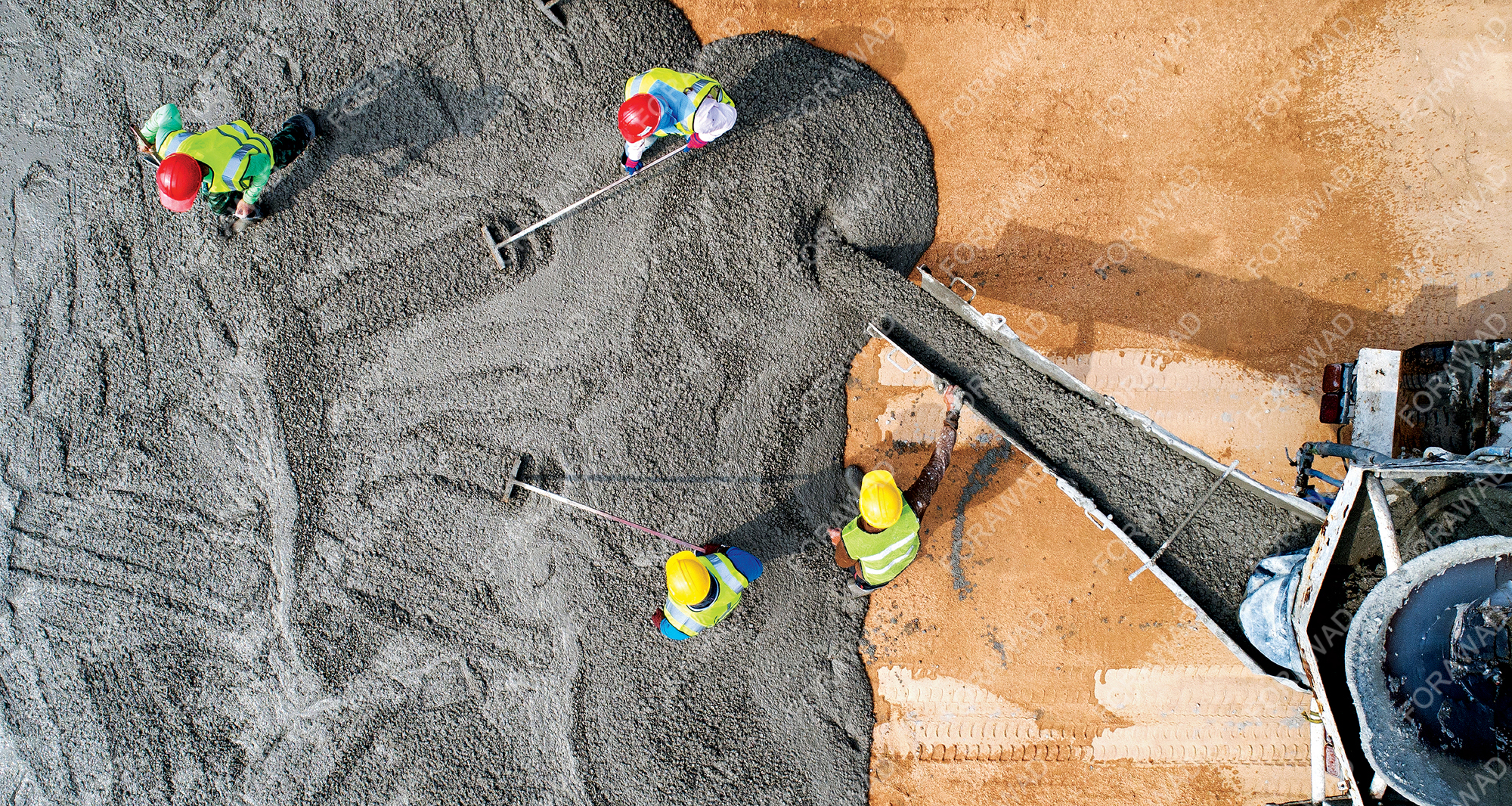
- The Revolution of PP Fiber in Concrete: Micro-reinforcement and Enhanced Durability
This is the most classic and widespread application of PP fiber in construction.
- Working Principle:
- Crack Resistance During the Plastic Stage: Before fresh concrete sets and hardens, moisture evaporation triggers plastic shrinkage. Uniformly dispersed PP fibers form a three-dimensional network within the concrete, resisting shrinkage stress and significantly reducing or even eliminating plastic shrinkage cracks.
- Improved Performance After Hardening: Improves impact resistance, abrasion resistance, and fatigue resistance. The fibers bridge micro-cracks, delaying their propagation and improving the material's toughness (flexural strength) and energy absorption capacity.
- Types and Applications:
- Monofilament Fiber: The most commonly used, available in various diameters and lengths, primarily used to prevent plastic shrinkage cracks.For example, FWD-01PP is a monofilament fiber, and we can provide different lengths according to customer requirements.
- Networked Fiber: Made from fibrillated films, dispersed into a mesh structure upon contact with water or by stirring, providing a more uniform reinforcement effect.
- Structural (Macro) Fibers: Longer (typically >40mm) and larger diameter PP fibers can partially replace traditional steel mesh/welded wire mesh for controlling cracks caused by temperature differences and drying shrinkage, especially advantageous in slab structures (floors, slabs).
- Core Advantages:
- Seamless Construction: Compared to steel mesh, the fibers are uniformly dispersed, with no localized weaknesses, making construction faster.
- Volumetric Stability: Reduces cracking, improves impermeability, thereby enhancing concrete durability and extending structural lifespan.
- Economic Benefits: Saves installation labor, speeds up construction, and reduces long-term maintenance costs.
- Typical Applications:
- Industrial Flooring, Warehouse Flooring
- Building Slabs, Roofs
- Precast Concrete Components
- Shotcrete (Tunnel Lining, Slope Protection)
- PP Geosynthetics: The Cornerstone of Foundation and Civil Engineering
PP, due to its excellent chemical resistance (especially acid and alkali resistance), high strength, and low cost, has become the preferred raw material for manufacturing materials such as geotextiles, geogrids, and geocells.
* Geotextiles (mainly made of PP short-fiber or long-filament needle-punched nonwoven fabric):
* Isolation Function: Laid between the subgrade and soft soil to prevent different materials from mixing and maintain the integrity of the base structure.
* Filtration Function: Allows water to pass freely while preventing soil particle loss; used around drainage structures.
* Drainage Function: Utilizes its porous structure to drain water along a planar direction.
* Protective Function:Protects waterproof membranes or fragile soil layers from damage.
* Geogrids/Cells (mainly made of PP sheets through stretching or extrusion):
* Reinforcement Function:This is its core application. Embedding the geogrid/cell in the soil, the load is distributed through friction, greatly improving the soil's bearing capacity and stability, and reducing uneven settlement.
- Application scenarios: Soft soil foundation treatment, reinforced soil retaining walls, steep slope reinforcement, roadbed widening, parking lot foundations, etc.
III. Key Roles in Road Engineering
- Crack-Resistant Asphalt Concrete: Adding PP fibers to asphalt mixtures creates a significant fiber adsorption effect, substantially increasing the viscosity of the asphalt mastic, reducing high-temperature rutting, low-temperature cracking, and reflective cracking, thus extending road service life.
- Cement Concrete Pavement: As mentioned earlier, using PP fibers to reinforce concrete pavements effectively reduces transverse and longitudinal cracks.
- Subgrade Treatment: Using PP geogrids for subgrade reinforcement treats soft soil subgrades and prevents pavement collapse.
- Special and Innovative Applications
- Building Insulation Systems: Hollow or modified PP fibers can serve as a reinforcing skeleton for insulation materials or be made into insulation felts, possessing water-repellent and mildew-resistant properties.
- Waterproofing System Reinforcement: Used as a reinforcing base for waterproof membranes, providing dimensional stability and tear resistance.
- Precast Component Connections: Polypropylene fiber ropes or tapes can be used for flexible connections or crack control strips between precast concrete components.
- Smart Application Exploration: Researchers are exploring embedding conductive PP fibers (such as those doped with carbon black) into concrete for structural health monitoring (self-sensing concrete), detecting cracks and strain in real time.
- Sustainability Contributions
- Durability and Sustainability: PP fibers improve the durability of concrete and soil structures, reducing the need for maintenance and reconstruction, thereby saving resources and reducing the environmental impact throughout the entire life cycle.
- Lightweighting and Material Conservation: In some applications, it can replace some steel, achieving lightweighting.
- Recycling Potential: After building demolition, PP fiber reinforced concrete blocks can be crushed and recycled as aggregate; PP geotextiles can also be recycled. Although the current recycling system is not yet perfect, the material itself is recyclable.
- Summary and Outlook
In the construction field, PP fiber has evolved from a simple "concrete additive" into a multifunctional, high-performance engineering material. At both the microscopic (millimeter-level fiber) and macroscopic (meter-level geosynthetic material) scales, it works together to address core construction challenges: controlling cracking, enhancing stability, extending lifespan, and reducing costs.
Future development trends include:
- High Performance: Developing PP fibers with higher strength, higher modulus, and better weather resistance to cope with harsher environments.
- Functional Integration: Combining sensing, self-healing, and other functions with PP fibers to develop smart building materials.
- Circular Design: Considering the ease of disassembly and recycling of PP fiber building materials from the initial product design stage, promoting a circular economy in the construction industry.
With its excellent cost-effectiveness and reliable performance, FWD PP fiber FWD-01PP has become an indispensable "invisible skeleton" of modern buildings, silently and solidly supporting our built environment.
Want to learn more? Please contact us. FWD specializes in the research and development and production of PP fiber. Let us help you choose the product best suited to your needs. For more information, please visit www.fwdnewtech.com or contact us at info@fwdnewtech.com.