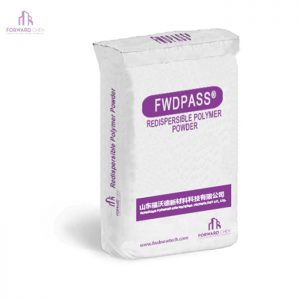
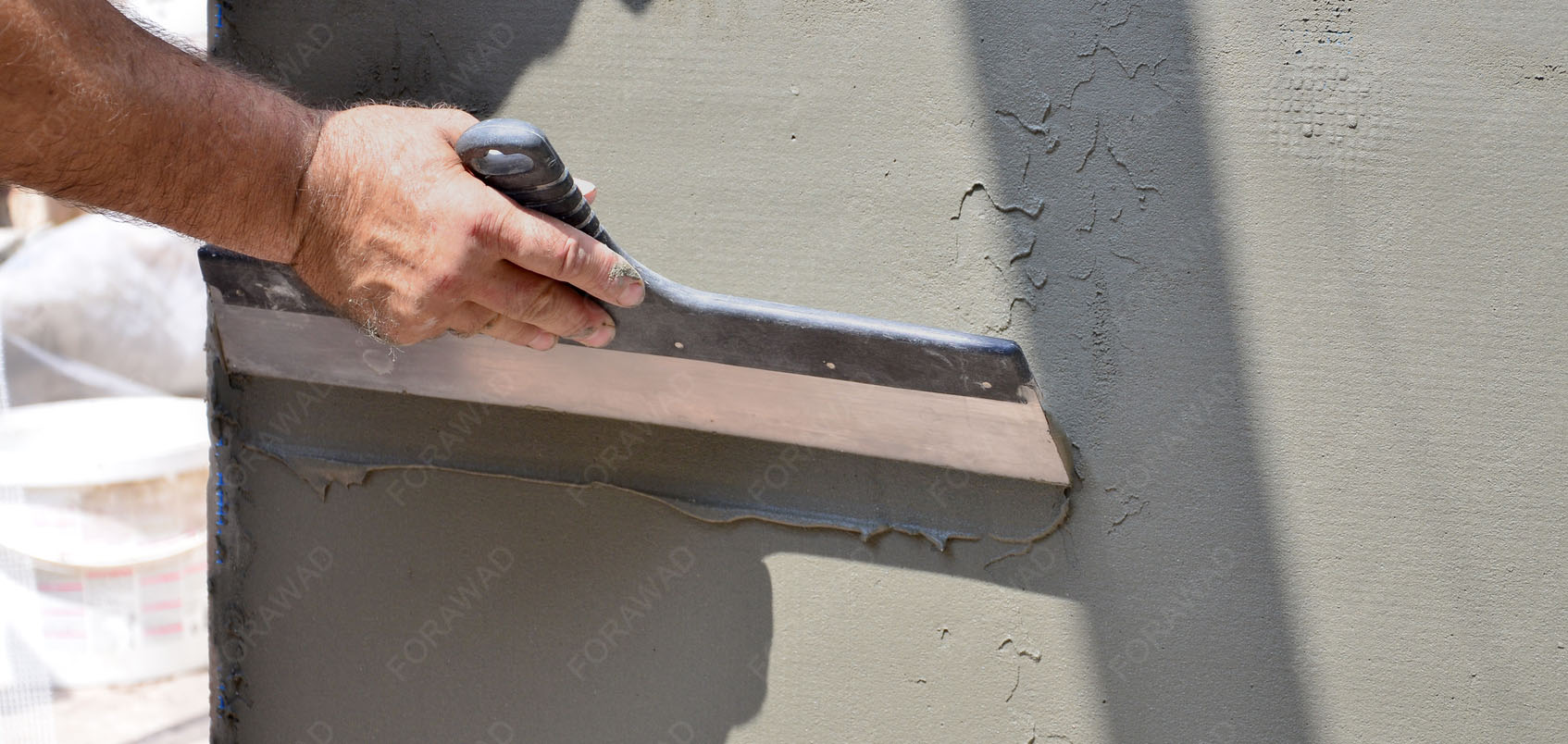
In building decoration projects, plaster mortar and wall putty are fundamental materials for ensuring smooth, beautiful, and durable wall surfaces. With the development of building technology and people's pursuit of high-quality living environments, traditional cement mortar and putty powder can no longer meet higher performance requirements. The emergence of Redispersible Polymer Powder (RDP) has completely revolutionized the performance of these dry-mix mortar products, and it is known as the "key additive" or "soul" component of modern building materials. FWD's RDP FWD 5010 and RDP FWD 1100 are widely used in plastering mortar and putty with excellent results.
- What is RDP?
RDP is a white powder made from special emulsions (such as vinyl acetate-ethylene copolymer (VAE), acrylates, etc.) through a spray drying process. Its most important characteristic is its redispersibility in water, forming a stable emulsion with chemical properties essentially identical to the original emulsion. This allows it to be easily added to dry powder building materials, where it can be mixed with water on-site to exhibit the superior performance of an organic polymer adhesive.
- Mechanism of RDP in Plastering Mortar and Putty
When RDP FWD 5010 is added to a dry powder product and mixed with water, the RDP particles redisperse into an emulsion and are evenly distributed throughout the mortar/putty system. During the drying and curing process after application, moisture evaporates, and the polymer particles gradually aggregate, eventually forming a continuous, flexible polymer film. This film firmly binds cement hydration products, aggregates, and other inorganic materials together and fills their micropores. This "organic-inorganic" composite network structure is fundamental to the performance improvement.
III. Key Enhancements of Plaster Mortar Performance by RDP
Plaster mortar is primarily used for leveling wall substrates. Adding RDP FWD 1100 results in a significant performance leap:
- Superior Bonding and Adhesion:
- The polymer film effectively penetrates the pores of the substrate material, forming a mechanical embedding and generating strong chemical adhesion to the substrate (concrete, brickwork, aerated concrete blocks, etc.) and the finishing layer. This is key to solving problems like hollow areas and detachment.
- Excellent Flexibility and Crack Resistance:
- The polymer film imparts elasticity to the mortar, buffering and dispersing stress caused by temperature changes, substrate shrinkage, or minor vibrations, significantly improving crack resistance, especially suitable for plaster mortars with insulation layers.
- Good Workability:
- RDP has an air-entraining effect, making the mortar smoother, improving workability and application feel, extending open time, and increasing work efficiency.
- Enhanced Durability and Weather Resistance:
The closed-pore polymer film reduces water absorption, improving the mortar's resistance to freeze-thaw cycles and its impermeability, thus comprehensively enhancing its durability.
- Reduced Modulus of Elasticity:
This makes the plaster layer more flexible, better adapting to the deformation of the rigid substrate and reducing cracks caused by mismatched deformation.
- Key Enhancement of wall Putty Performance by RDP
Wall Putty is used for fine leveling of surface layers, providing a perfect base for paint or decorative layers. The addition of RDP is the core reason why it achieves high-performance standards (such as the water-resistant putty standard in the national standard "Building Interior Putty" JG/T 298).
- Balance between Sandability and Surface Hardness:
Pure inorganic wall putty is difficult to sand and easily powders; after adding RDP, the wall putty layer forms a strong yet slightly tough structure after drying, making sanding easy, dust-free, and resulting in a smooth and delicate surface.
- Extremely Strong Cohesion and Water Resistance:
The three-dimensional network structure formed by RDP gives the wall putty extremely high cohesive strength. The polymer film does not dissolve when exposed to water, effectively blocking moisture erosion, preventing the wall putty from softening, bubbling, or peeling even in high humidity environments. This is a core characteristic of water-resistant putty.
- Excellent Resistance to Self-Cracking:
Wall Putty layers are usually thin and cover a large area, making them prone to cracking due to drying shrinkage. RDP's toughening effect effectively suppresses this shrinkage stress, ensuring crack-free thin-layer application.
- Improved adhesion to the substrate:
Especially for smooth, dense substrates (such as cast-in-place concrete slabs), RDP provides crucial initial adhesion, preventing the putty layer from peeling off entirely.
- Provides a better substrate for topcoat coatings:
A dense substrate with a certain degree of water absorption is beneficial for paint film formation and adhesion. RDP-modified wall putty optimizes the substrate's water absorption, improving paint adhesion.
- Application Selection and Precautions
- Type Selection: RDPs with different chemical compositions (such as VAE and acrylic-based) have different focuses. VAE-based RDPs offer high cost-effectiveness and good overall performance, making them the most commonly used. Acrylic-based RDPs have superior water and alkali resistance, making them suitable for high-performance applications.
- Dosage: Typically, the dosage in plaster mortar is 0.5%-3% (by dry powder weight), and in wall putty, it is 1%-4%. The dosage needs to be determined comprehensively based on the formulation cost and performance requirements.
- Synergistic Effect with Other Additives: RDP needs to be used in synergistic effects with additives such as cellulose ethers (water-retaining and thickening agents), water-repellent agents, and fibers to form a complete additive system and achieve the best results.
- Storage: RDP should be stored in a cool, dry place to prevent moisture absorption and clumping.
- Conclusion
RDP is the core driving force behind the evolution of modern dry-mix mortar technology from "inorganic rigidity" to "organic-inorganic composite flexibility." For plaster mortar, RDP means stronger adhesion, less cracking, and longer lifespan; for wall putty, RDP is the cornerstone for achieving high-performance indicators such as water resistance, abrasion resistance, and high-strength crack resistance. In today's pursuit of building quality, environmental protection, and construction efficiency, RDP has become an indispensable key material for producing high-quality plaster mortar and wall putty, profoundly affecting the overall quality and durability of building decoration projects.
[Contact Us] To request samples or communicate with our technical experts, learn how FWDCEL RDP can change your building materials. We also offer a range of RDP products in different specifications, widely used in various applications. RDP FWD 5010 and RDP FWD 1100 are widely used in plaster mortar and wall putty, with excellent customer feedback. Welcome to inquire. For more information, please visit www.fwdnewtech.com or contact us at info@fwdnewtech.com.
FWDCEL – Your reliable partner in building chemicals.