
Introduction
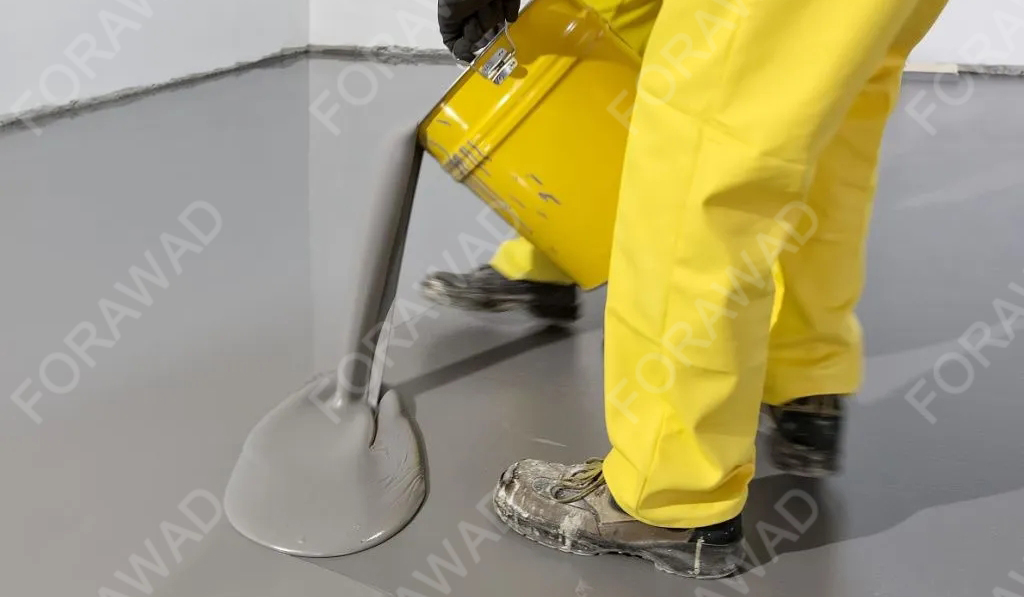
Cement-based self-leveling mortars (SLM) are widely used for flooring applications due to their fast application, smooth finish, crack resistance, and high fluidity. In these systems, Hydroxypropyl Methyl Cellulose (HPMC) plays a crucial role in determining rheological properties, workability, and water retention.
Mechanism of Action
HPMC is a non-ionic cellulose ether derived from plant fibers. In self-leveling compounds, it contributes to the following:
- Thickening and Rheological Control:HPMC forms a three-dimensional network in water, increasing viscosity and providing the necessary suspension of aggregates, which improves flow and prevents segregation.
- Water Retention: It retains water, preventing premature evaporation and surface cracking while ensuring adequate hydration for strength development.
- Air Entrainment:During mixing, HPMC introduces microbubbles, improving fluidity and freeze-thaw resistance. However, excessive air can lower compressive strength.
Key Properties Affected by HPMC
- Flowability and Homogeneity:The viscosity of HPMC directly influences flowability. Low-viscosity HPMC (400-600 mPas) is ideal for ensuring the material flows well without segregation, providing both high spreadability and proper suspending force.
- Segregation Resistance:HPMC stabilizes self-leveling compounds, preventing aggregation and surface rust, which could compromise both appearance and performance.
- Construction Open Time:HPMC's retarding effect extends the open time, allowing easier workability, especially in hot climates. High-temperature modified HPMC can prevent viscosity loss and maintain water retention, which is critical for construction efficiency.
- Early Strength and Shrinkage:While HPMC aids in hydration by retaining water, excessive amounts can reduce early strength and increase air content, which weakens the final product. Proper dosage ensures adequate strength while minimizing shrinkage.
Conclusion
Despite being a small additive, HPMC is critical in optimizing self-leveling compounds’ rheology, stability, and workability. A successful self-leveling formulation requires a balanced selection of HPMC based on environmental conditions, strength requirements, and other additives. The low-viscosity, high-water retention, and delayed-dissolution properties of HPMC make it a preferred choice for high-performance self-leveling materials. Customized HPMC modifications can further optimize formulations for specific construction needs.