
Abstract: This article explores the key role of redispersible polymer (RDP) in improving the overall performance of exterior wall insulation and decoration systems. As a polymer modifier, RDP fundamentally improves the flexibility, bond strength, weather resistance, and workability of the bonding mortar, plastering mortar, and decorative surface layer in EIFS, driving the evolution of EIFS from a traditional "rigid" system to a high-performance "flexible" system.
I. Core Concept Analysis
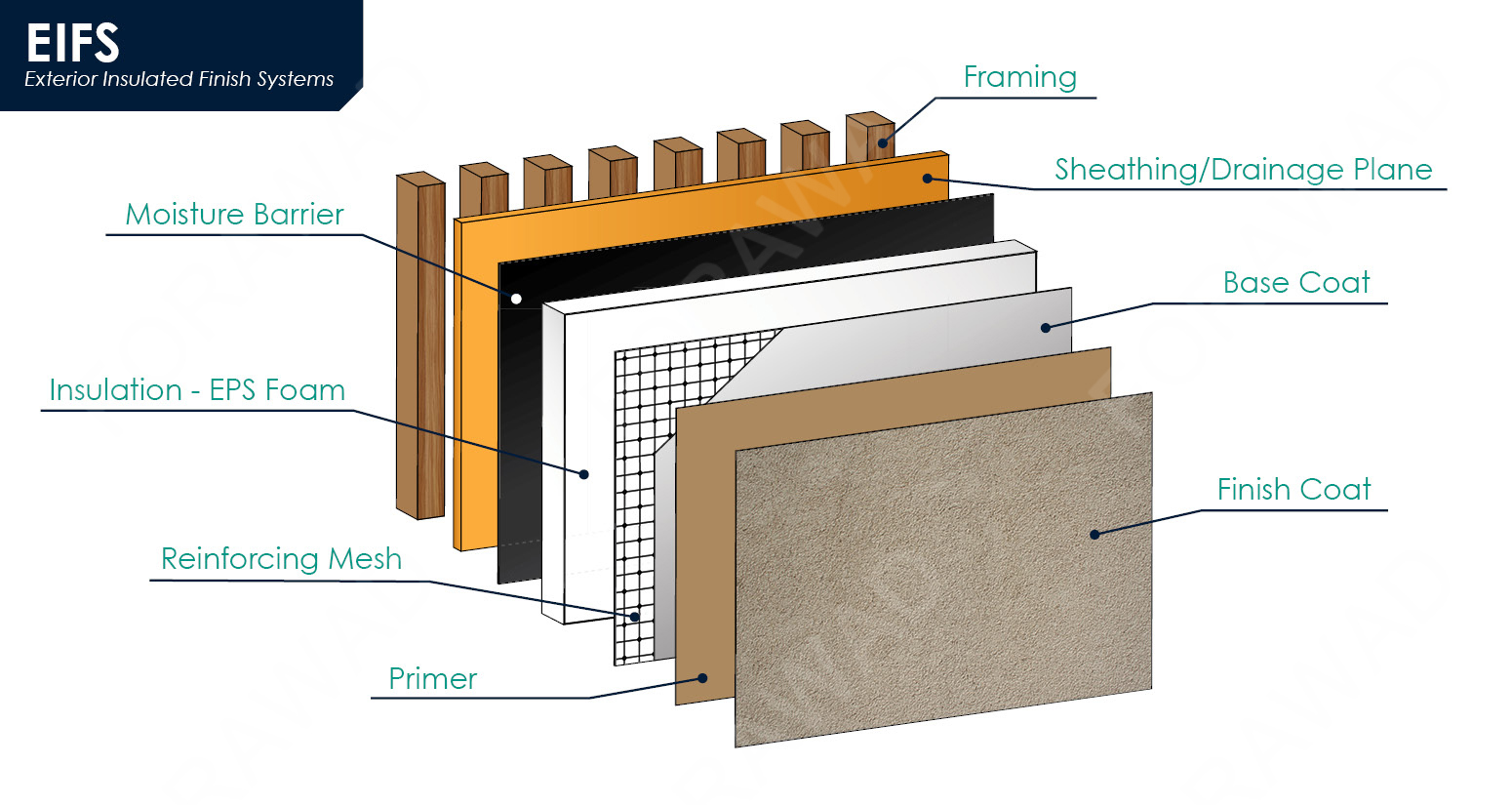
EIFS: A multi-layer composite exterior wall system, typically composed of an adhesive layer, insulation boards (EPS, XPS, rock wool, etc.), a plastering layer (with reinforcing mesh embedded within), and a decorative surface layer. Its core function is to provide excellent thermal insulation performance and give buildings an aesthetically pleasing exterior finish.
RDP: A powdered binder made from a polymer emulsion through spray drying. When mixed with water, it redisperses into a stable emulsion and forms a continuous polymer film after the mortar solidifies and dries. This film intertwines with cement hydration products, forming an organic-inorganic composite network structure.
II.Challenges of Traditional EIFS and the Introduction of RDP
Early EIFS (sometimes referred to as "traditional systems" or "rigid systems") primarily relied on pure cement-based mortar. These systems have several inherent drawbacks:
High brittleness and cracking susceptibility: Cement-based materials are highly rigid and have poor resistance to deformation, making them prone to stress cracking under temperature changes, structural displacement, or slight deformation of the substrate.
Limited bond strength:Insufficient bonding reliability with various substrates (especially low-absorption or smooth surfaces) and insulation boards.
Poor impact resistance: The system is generally brittle and difficult to withstand external impacts.
Low flexibility: Unable to adapt to the deformation requirements of modern buildings caused by dynamic wind pressure and seismic micro-displacements.
The introduction of RDP marks the beginning of the era of "polymer-modified" or "flexible systems" for EIFS. By adding RDP to the mortar formulation, the system performance has undergone a qualitative leap.
III. Key Roles of RDP in Each Layer of EIFS
- Role in Bonding Mortar
Enhanced Adhesion: The polymer film formed by RDP has excellent wetting and adhesion to the substrate (concrete, masonry) and organic insulation board (such as EPS) surfaces, providing a dual effect of mechanical interlocking and chemical bonding, ensuring the system's safety and stability.
Reduced Elastic Modulus: Makes the mortar more flexible, better absorbing and dispersing stress, reducing shear stress caused by the difference in thermal expansion coefficients between the substrate and the insulation board.
- Role in Finishing Mortar (Crack-Resistant Mortar)
Crack Resistance and Toughness: This is the core function of RDP. The polymer film forms a network in the pores and microcracks of the cement paste, preventing crack propagation, giving the mortar extremely high tensile strength and elongation at break, and effectively covering and restraining the deformation of the insulation board.
RDP FWD 1200, RDP FWD 5044, and RDP FWD8031 are flexible RDPs designed with FWD, offering superior capabilities to enhance the flexibility of EIFS.
Synergy with Reinforcing Mesh: The addition of RDP allows EIFS mortar to more effectively wrap and bond fiberglass mesh or alkali-resistant mesh, forming a high-tensile, high-impact "composite layer," which serves as the crack-resistant protective layer for the entire EIFS.
Hydrophobicity and Water Resistance: Our special waterproof mortar RDP, RDP FWD8031, effectively clogs capillaries, reduces water absorption, and improves the system's resistance to rain and freeze-thaw cycles.
- Role in Decorative Finishing Layers
In Putty: Provides excellent workability and sandability, enhancing the adhesion of the coating to the finishing layer.
In Decorative/Textured Mortars: FWD RDP is a key film-forming substance, directly affecting the coating's flexibility, stain resistance, scrub resistance, and early water resistance.
IV . Core Performance Advantages of FWD RDP
- Superior Crack Resistance: Enables EIFSsystems to withstand greater dynamic loads and deformations, maintaining their appearance integrity over the long term.
- Enhanced Safety: Provides the mortar with excellent bond strength and tensile strength, ensuring a strong bond between the insulation layer and the substrate, strong resistance to negative wind pressure, and reduced risk of detachment.
- Improved Durability: Enhanced resistance to water penetration and freeze-thaw cycles extends the overall system lifespan.
- Excellent Workability: The mortar is smoother, retains more water better, has a longer open time, is easier to apply and smooth, and improves work efficiency.
- Adaptability to Diverse Substrates: Can be applied directly to various new and old substrates, broadening the application range.
V. Conclusion
FWD RDP is no longer a simple "additive" in EIFS, but rather the chemical cornerstone for achieving its three core performance characteristics: safety, durability, and crack resistance. Through polymer modification technology, it perfectly combines the rigidity of inorganic materials with the flexibility of organic materials, enabling modern EIFS systems to meet increasingly stringent building codes, climate challenges, and aesthetic demands. Understanding the working principle of RDP is crucial for the design, material selection, construction quality control, and ultimately, the assurance of building performance in EIFS systems. In the future, with the continuous improvement of building energy efficiency standards and the advancement of materials science, RDP technology will continue to drive EIFS systems towards higher performance, greater intelligence, and greater sustainability.