
In the field of building repair and maintenance, the performance of repair mortars and crack fillers directly determines the quality and durability of the project. Among them, a key additive called Redispersible Polymer Powder (RDP) plays an indispensable role behind the scenes.
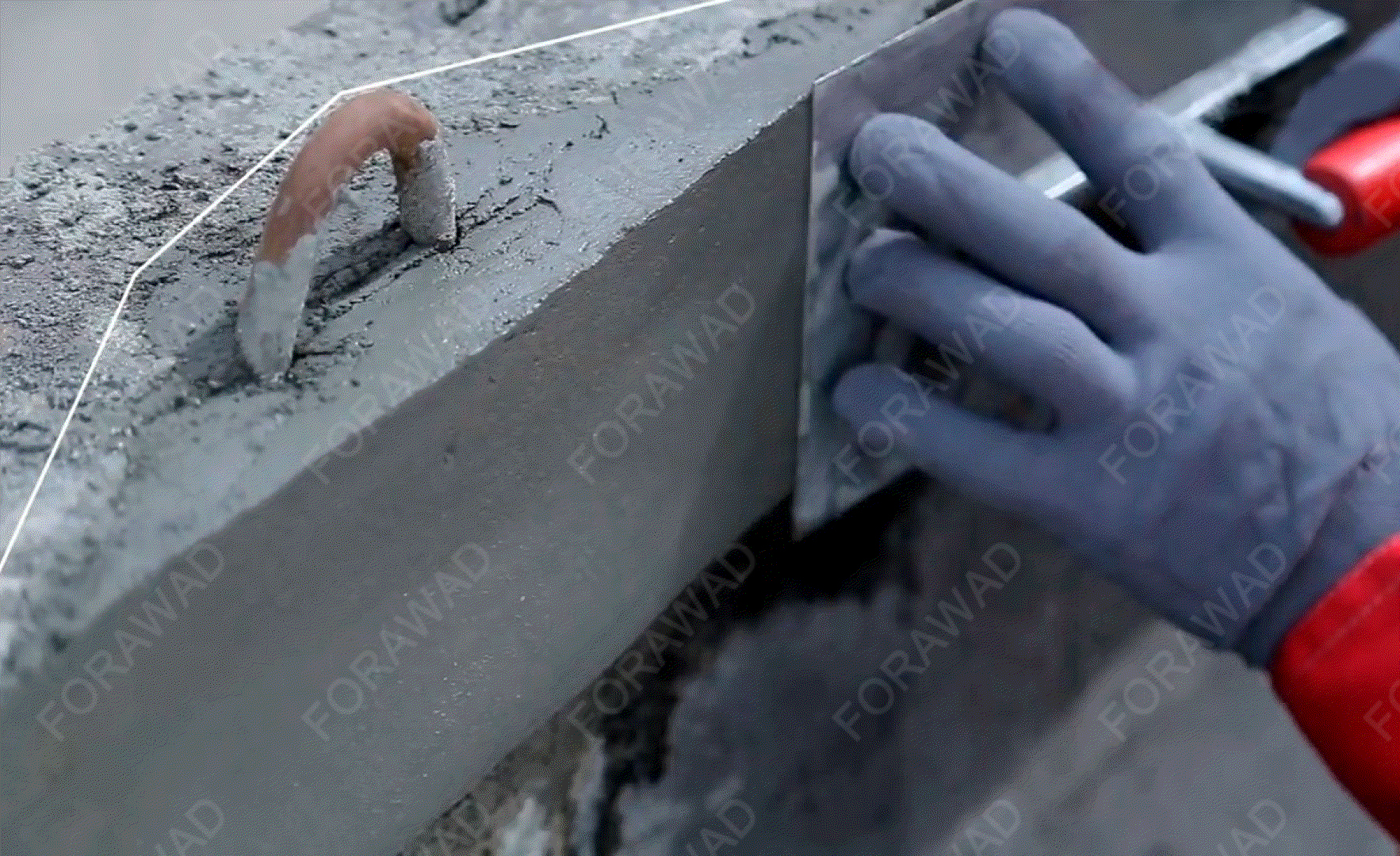 What is Redispersible Polymer Powder (RDP)?
Redispersible Polymer Powder is a white powder produced by spray drying a polymer emulsion. When mixed with water, it redisperses into a stable emulsion with properties essentially identical to the original latex. In cement based dry mix mortars (such as repair materials), RDP is one of the most important organic modifiers.
Three Core Functions of RDP in Repair Materials
Enhances Bond Strength for a Firm Grip on Substrates
After the mortar cures, the polymer film formed by RDP acts like countless tiny “arms” that penetrate into the fine pores of the substrate and bridge old and new materials. This significantly improves the adhesive strength between the repair mortar and various existing substrates—old concrete, masonry, wood, etc.—effectively preventing hollowing and detachment. This is especially important for thin layer repairs.
For high bonding applications, FWD 1100 offers excellent adhesion performance.
Improves Flexibility and Crack Resistance
Cement based materials are inherently hard and brittle. The addition of RDP imparts a degree of flexibility and deformation capacity. When stresses arise from temperature changes or slight vibrations in the substrate, the polymer film can absorb and disperse this energy, greatly enhancing the material’s crack and impact resistance, allowing the repair layer to adapt to dynamic changes.
Where superior flexibility is required, FWD 1200 provides enhanced elasticity and deformation capability.
Optimizes Workability and Durability
Better workability: RDP has an air entraining effect, making the mortar smoother, extending open time, and improving application smoothness.
Lower modulus of elasticity: Helps match the elasticity of the repair material to that of the existing concrete, reducing stress concentration.
Improved durability: The formed polymer film blocks the penetration of harmful ions, enhancing freeze thaw resistance and water resistance.
For applications demanding high water resistance and durability, FWD 5044 is recommended.
How It Works in Real Applications
For crack fillers: RDP ensures tight bonding between the filler and the crack walls. Its flexibility allows minor crack movement without recracking.
In flexible crack bridging formulations, FWD 5031 delivers balanced cohesion and adaptability.
For structural repair mortars: RDP is the core ingredient for achieving high strength, durable, and reliable repairs, especially in load bearing or vibration prone structural areas.
For structural repairs requiring high strength and toughness, FWD 5010 offers robust performance.
For wall plaster repairs: It effectively prevents delamination and cracking, ensuring long term integration of the repaired surface with the existing wall.
In finish coatings and plaster repairs, FWD 5111 ensures smooth workability and reliable finish adhesion.
Conclusion
Although Redispersible Polymer Powder accounts for only a small proportion of the repair mortar formulation, it is the key to leap forward improvements—from “strong bonding” and “flexible crack resistance” to easy application and long term durability. Choosing repair materials containing high quality RDP is essential to ensure the intended performance and long service life of building repair projects.
[Contact Us] to request samples or speak with our technical experts about how FWDCEL RDP can improve your building materials. We also offer a range of different RDP specifications suitable for various applications. For more information, please visit www.fwdnewtech.com or email us at info@fwdnewtech.com.
FWDCEL – Your Reliable Partner in Construction Chemistry.