
#HPMC #Wall Plastering Mortar #Self-Leveling Compounds
In the field of construction engineering, the performance of materials often determines the final quality and durability of a project. Among these, a white powder named Hydroxypropyl Methylcellulose (HPMC) has become an indispensable core additive, from ordinary plastering to high-performance specialty mortars. It is hailed as the "intelligent additive" or the "soul of mortar" in modern construction.
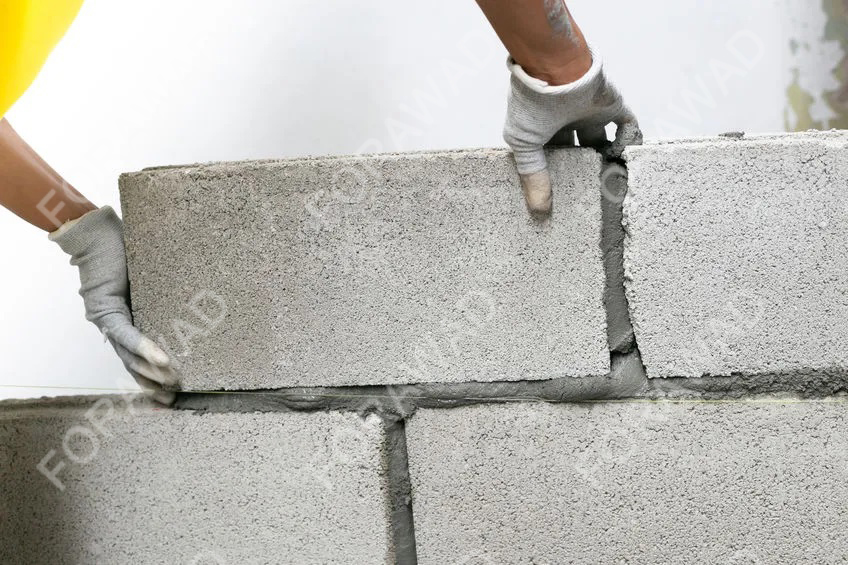
- The Core Mechanism of HPMC: Why Can't Construction Do Without It?
HPMC is not merely a simple "glue" in building materials; it is a multifaceted performance regulator. Its functions are rooted in its unique molecular structure:
Exceptional Water Retention: This is HPMC's most crucial function in cement-based and gypsum-based materials. It can adsorb a significant amount of water and release it slowly, providing ample time and moisture for the complete hydration reaction of cement/gypsum. This is fundamental for ensuring the final strength of the mortar and preventing cracking.
Excellent Thickening and Rheological Properties: HPMC significantly increases the consistency of mortar, imparting good "thixotropy" — it becomes thinner for easy application when stirred and thicker to prevent sagging when static. This directly resolves the contradiction between sag resistance and workability.
Retarding Effect: Through its water-retaining action, it indirectly regulates and prolongs the mortar's workable time (open time). This is especially crucial in hot and dry environments, providing workers with ample time for adjustment and finishing.
Enhanced Bonding Strength: HPMC molecules can form a film layer between the mortar and the substrate, improving mechanical interlocking and adsorption, thereby increasing bond strength.
- Analysis of HPMC's "Full-Scenario" Applications in Construction
Wall Plastering Mortar
Role: Core water-retaining agent and thickener.
Benefits:
Prevents Hollowing and Cracking: Ensures complete cement hydration, enhancing the mortar's cohesion and strength.
Improves Workability: Makes the mortar soft, smooth, easy to trowel, and simplifies finishing.
Reduces Material Waste ("Dropped Mortar"): Good viscosity minimizes material loss.
Tile Adhesive (Cementitious Tile Adhesive)
Role: Key performance modifier.
Benefits:
Anti-Sag/Slip Resistance: Prevents tiles from sliding after application, allowing bottom-up installation and improving work efficiency.
Extended Adjustment Time: Tiles can be adjusted easily within 15-20 minutes after placement.
High Bond Strength: Ensures long-term performance without hollowing or tile detachment.
External Thermal Insulation Composite Systems (ETICS) Mortar
Role: Guardian of system stability.
Applications:
Insulation Board Adhesive Mortar: Provides strong initial tack to secure insulation boards.
Base Coat/Anti-crack Mortar: Encapsulates and reinforces fiberglass mesh, forming a tough, crack-resistant protective layer. HPMC's water retention ensures polymers (like Redispersible Polymer Powder) fully form films for maximum effectiveness.
Putties (Interior & Exterior Wall)
Role: Master balancer of workability and sandability.
Benefits:
Smooth Application: Provides a light, smooth feel, allowing for thicker application in one pass.
Water Retention and Softness: Facilitates the performance of polymers or cement in the putty, resulting in good strength after drying.
Delayed Drying: Provides an ideal time window for sanding, avoiding difficulties caused by premature drying or excessive hardness.
Self-Leveling Compounds
Role: Rheology controller.
Benefits:
Precise Flow Control: Allows free flow and leveling under gravity while preventing aggregate segregation and sedimentation.
Defoaming Aid: Its slight air-entraining effect helps eliminate bubbles, improving surface smoothness.
Gypsum-Based Products (Gypsum Plaster, Joint Filler, etc.)
Role: Indispensable retarder and water-retaining agent.
Benefits:
Precise Control of Setting Time: Adapts to different construction environment requirements.
Prevents Rapid Water Loss from Gypsum: Avoids reduced strength and dusting of gypsum caused by rapid water absorption by the substrate.
Grouts and Repair Mortars
Role: Performance stabilizer.
Benefits: Prevents rapid water loss and shrinkage cracking, improves impermeability and durability.
III. How to Select the Right HPMC for Different Applications?
In construction applications, the selection of HPMC primarily depends on three technical parameters:
Viscosity: Typically expressed as the measured value of a 2% aqueous solution at 20°C (unit: mPa·s).
High Viscosity (above 100,000 mPa·s): Like HPMC MP100M, it’s used for ordinary plastering, putties, etc., where extremely high water retention and thickening are required.
Medium Viscosity (40,000 - 80,000 mPa·s): Like HPMC MP60M, the most common range, suitable for tile adhesives, insulation mortars, etc., balancing water retention and workability.
Low Viscosity (below 40,000 mPa·s): Like HPMC MP400M, it’s used for self-leveling compounds and specialty mortars requiring high fluidity.
Gel Temperature: The temperature at which an HPMC solution forms a gel upon heating. For construction in hot regions, grades with higher gel temperature (e.g., ≥70°C) should be selected to prevent mortar from thickening too quickly due to high temperatures, which affects workability.
Fineness: Finer powder dissolves faster and has better anti-lumping properties, which is crucial for the mechanized continuous production of dry-mix mortars.
- Market Trends and Future Outlook
As China's construction industry shifts towards green, high-quality, and prefabricated development, the application trends of HPMC are becoming increasingly evident:
Performance Specialization: Development of dedicated HPMC grades for specialty mortars (e.g., high-strength tile adhesive, rapid self-leveling compounds).
Environmental Focus: Its position as a non-toxic, harmless additive from natural sources is becoming more solid in eco-friendly building materials.
Construction Efficiency: Growing demand for HPMC products compatible with mechanical spray application, requiring excellent solubility and anti-lumping properties.
Conclusion:
The application of HPMC in construction has long surpassed the simple concept of an "additive." In an intelligent manner, it deeply intervenes in and optimizes the entire process of mortar from mixing and application to final hardening. It is key to improving construction quality, ensuring work efficiency, and realizing material performance design. On the path to pursuing building durability and safety, HPMC will continue to play its irreplaceable role as the "behind-the-scenes hero."
Want to learn more? Please contact us. FWD specializes in HPMC R&D and production. Let us help you choose the product that best suits your needs. For details, please visit www.fwdnewtech.com or contact us via email at info@fwdnewtech.com.